On 14 June 1980, four teenagers performed their first concert together at Nicholas Comprehensive School in Basildon. Within months they would rename themselves Depeche Mode and begin a journey that would see them sell more than 100 million records worldwide. This is the story of how an Essex new town, once dismissed as a concrete jungle, gave rise to one of the most influential electronic bands in history.
The New Town That Made Anything Possible
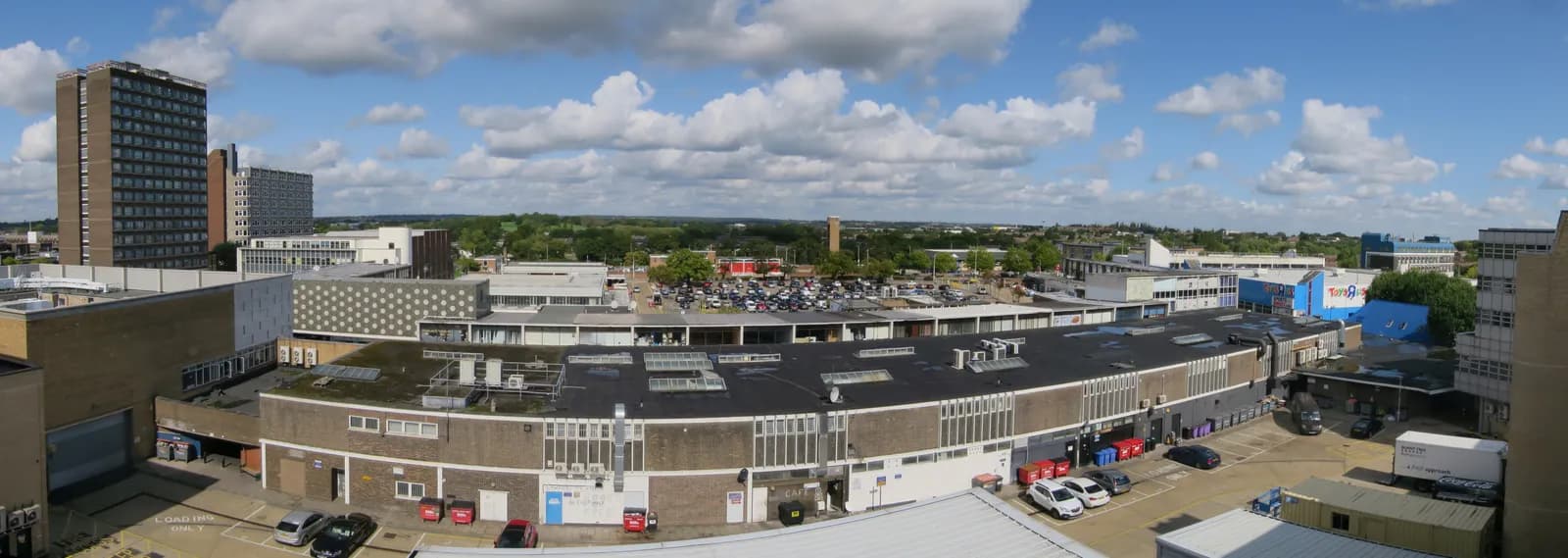
Basildon was designated a new town on 4 January 1949 under the New Towns Act 1946. Built to accommodate London overspill, it transformed scattered villages, Laindon, Pitsea, and Vange, into a planned community of modern housing estates, pedestrian precincts, and concrete walkways. Locals nicknamed it "Little Moscow on the Thames" due to its Labour-controlled council and stark modernist architecture.
For the children growing up in this environment during the 1960s and 1970s, Basildon offered something unusual: a town with no precedents. As one chronicler of the local music scene noted, "anything was possible." Young people had access to decent schools, nearby jobs, clean open space, affordable housing, and easy transport links to London. The first generation of Basildonians were building a culture from scratch, and that do-it-yourself ethos would prove fertile ground for musical experimentation.
Four Boys from Four Estates
All four original members of Depeche Mode arrived in Basildon as children. Vince Clarke, born in South Woodford in 1960, moved to the town and attended Laindon School. Andrew Fletcher, born in Nottingham in 1961, arrived in Basildon at the age of two and attended Nicholas Comprehensive School. Martin Gore, born in London in 1961, moved to Basildon as a child and also attended Nicholas Comprehensive. Dave Gahan, born in Epping in 1962, arrived in Basildon as an infant and attended Barstable School.
Their paths first crossed in the mid-1970s. In 1977, Clarke and Fletcher formed a band called No Romance in China. By 1980, the pair had reconceived themselves as Composition of Sound, with Clarke on vocals and guitar and Fletcher on bass. Martin Gore, whom Fletcher had known since childhood, joined shortly afterwards as a third instrumentalist. The trio was still searching for a vocalist when Clarke heard Dave Gahan perform David Bowie's "Heroes" at a jam session in a local Scout hut. Gahan's commanding baritone completed the lineup.
The First Gig and the Name Change
The newly formed four-piece played their first concert as Composition of Sound on 14 June 1980 at Nicholas Comprehensive School in Basildon. The school, now known as James Hornsby School, commemorates this event with a plaque marking the location of the first performance.
The band continued performing locally throughout the summer, playing at school halls, church youth clubs, and pubs around Basildon and neighbouring towns. The Castle Mayne pub served as a haunt for Gore's earlier band, Norman and the Worms. The Van Gogh club provided the setting where Gore and Fletcher reconnected. The Q-Ball snooker hall would later host annual parties for Basildon friends and family throughout the 1980s as the band's fame grew.
Other venues in the South Essex circuit included the Top Alex, Barons, and Crocs, the latter being home to the Futurist and New Romantic Glamour Club in Southend, Leigh-on-Sea, and Rayleigh. This network of working-class venues gave the band their apprenticeship.
The band changed their name to Depeche Mode on 24 September 1980 at the Bridge House in Canning Town. Dave Gahan had spotted the phrase in a French fashion magazine, Dépêche Mode, and suggested it to the others. Martin Gore later explained the appeal: "It means 'hurried fashion' or 'fashion dispatch'. I like the sound of that."
The Basildon Sound
The environment that shaped Depeche Mode was distinctively Basildon. The town's planned community ethos created a tight-knit, supportive youth culture. "Everyone would use the same equipment and cheer everybody on," one observer noted. There was no established musical hierarchy to break into; bands shared instruments, attended one another's gigs, and collaborated freely.
The band's early sound, which Gore reportedly labelled "U.P. — ultra-pop," reflected both the accessibility of electronic instruments and the optimistic, anything-is-possible spirit of their hometown. Basildon provided the practical conditions, affordable housing, decent schools, open spaces, and proximity to London, that allowed young people to experiment without the pressure of high rents or entrenched competition.
Andy Fletcher acknowledged the band's shared origins as formative. "It shapes the feelings within the group," he said of their Basildon background. That sense of mutual support, born in Scout huts and school halls, would sustain the band through decades of internal tensions and external pressures.
Beyond Basildon: The Flight Cases That Still Said Home
As Depeche Mode graduated from Basildon school halls to global stadiums, they retained their connection to their origins. When the band played to 60,453 people at the Pasadena Rose Bowl in California in 1988, the flight cases backstage were still stencilled with the same legend: "Depeche Mode, Basildon, Essex."
Dave Gahan later reflected on that milestone: "It was amazing, Basildon boy makes good." The phrasing captured the persistent dual identity of the band: international electronic pioneers who remained, in some essential way, four boys from an Essex new town.
Visiting the Sites Today
James Hornsby School on Leinster Road remains the most tangible landmark for Depeche Mode pilgrims. The commemorative plaque marking the 14 June 1980 concert is accessible to visitors, and the school maintains a collection of memorabilia donated by Deb Danahay, founder of the first Depeche Mode fan club.
The Castle Mayne pub, Q-Ball snooker hall, and Van Gogh club have all since closed or changed hands, but their locations remain part of local lore. The street named "The Gore" in Basildon has occasionally been the subject of fan pranks, with suggestions to rename it in honour of Martin L. Gore.
International fans continue to make pilgrimages to Basildon, walking the concrete precincts and housing estates where the band formed their identity. Local fan events, including "A Very Special Weekend in Bas" organised by Deb Danahay, bring enthusiasts together to celebrate the town's musical heritage.
A Legacy Without Precedent
Despite Basildon's significance in the Depeche Mode story, the town itself has no official statue or council recognition of its most famous musical export. The commemorative plaque at James Hornsby School remains the only formal acknowledgement.
Perhaps that absence is fitting. Depeche Mode emerged from a town built on the principle that precedents did not matter; that a community could be planned from nothing and anything made possible. The band's global success, achieved without abandoning their Basildon identity, stands as testament to that founding vision.
For residents and visitors alike, the story offers a different way to see Basildon's concrete walkways and modernist precincts: not as the faceless architecture of a new town, but as the incubator of one of the most distinctive sounds in popular music.