Between the 1890s and the outbreak of the Second World War, thousands of working-class Londoners, many from the East End, carved out their own version of the countryside dream in the fields around what is now Basildon. They bought cheap agricultural plots and built weekend retreats from whatever materials they could find: obsolete army huts, railway carriages, coal barges, kit-built chalets, and simple wooden shacks.
The movement transformed the landscape. In 1891, Laindon parish recorded just 304 residents; by 1931, that number had swelled to 4,552. Basildon parish grew from 179 to 1,159 in the same period. Pitsea reached 3,414 inhabitants by 1931. This was not traditional rural growth. It was an explosion of self-built holiday homes, created by families escaping overcrowded London for a breath of Essex air.
Why Essex, Why Then
The plotlands phenomenon emerged from a perfect storm of economic conditions. American grain imports had depressed English agricultural prices, making farmland in the heavy clay soils around Basildon effectively worthless. Landowners were eager to sell. At the same time, the arrival of the railway at Pitsea in 1855 and Laindon in 1888 put the Essex countryside within reach of London workers for the first time.
Crucially, planning controls barely existed. Plotlanders could buy land and build virtually whatever they pleased. The historian Dennis Hardy described the result as "a makeshift world of shacks and shanties, scattered unevenly in plots of varying size and shape, with unmade roads and little in the way of services." It was chaotic, unsanctioned, and for thousands of families, it was theirs.
Life Without Services
The plotlanders traded convenience for ownership. There was no mains electricity, no street lighting, no piped water, and no sewage system. The 78 miles of unmade roads in the district became mud tracks in winter. Later surveys would find that 5,600 of the 8,700 properties in the area fell below Housing Act standards.
Yet the community thrived. Plotlanders grew fruit trees: pear, apple, plum, and damson. They built Anderson shelters during the war. Children explored the fields. The settlement at Dunton, west of Laindon, swelled to 25,000 people during the Blitz as families fled the bombing and made their weekend cottages permanent homes. For working-class Londoners locked out of conventional property ownership, the plotlands offered what Hardy called "the opportunity to take their own place in the sun."
From Arcadia to New Town
The end came swiftly. On 4 January 1949, Minister of Town and Country Planning Lewis Silkin designated Basildon a New Town. The Basildon Development Corporation, chaired initially by Sir Lancelot Keay, began compulsory purchase proceedings. Around 8,700 properties were identified; 5,500 were deemed substandard. By 1980, the corporation had cleared most of the plotland structures.
The process was controversial. Many residents, who had built their homes with their own hands, received what they considered derisory compensation. Some held out so long that the development plans had to be altered around them. The corporation was accused of bullying tactics, and in some cases, arson was suspected when properties burned before purchase could be completed.
What Remains
Nearly all evidence of the plotlands has vanished beneath Basildon's suburban streets. But one house survives. The Haven, built by Frederick Mills in the 1930s for himself, his wife Mena, and their sons Brian and Terry, stands as the last remaining plotlands home in the United Kingdom. It is now a museum, furnished to appear as it might have in the 1940s, though it has been closed for restoration since July 2021.
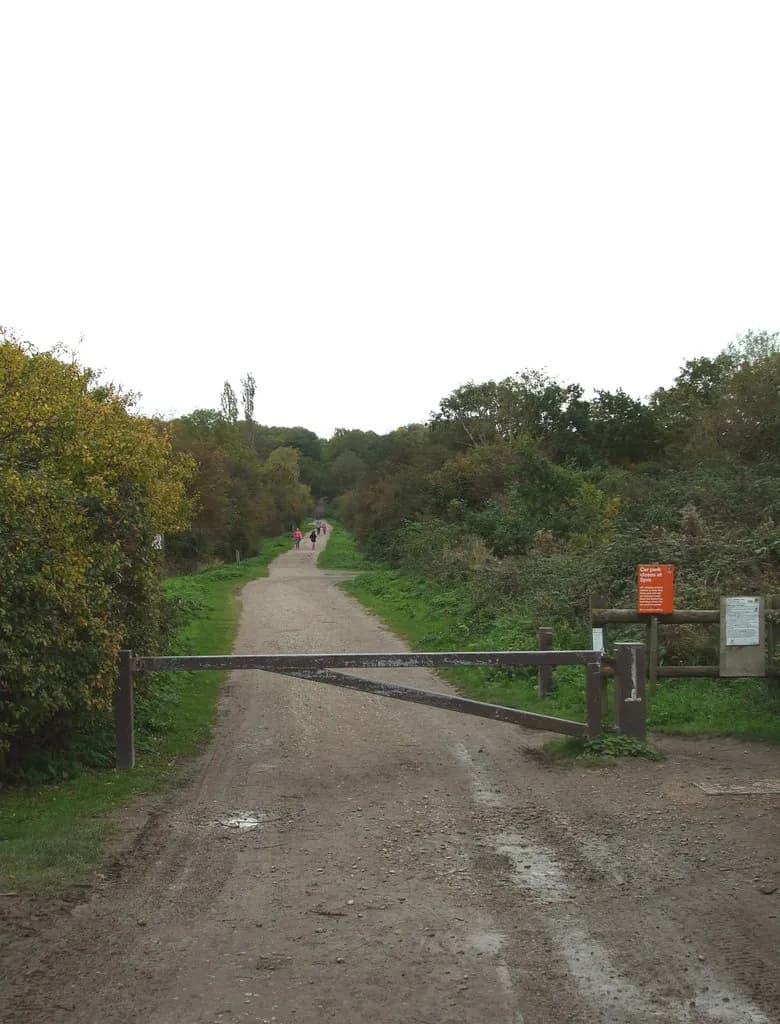
The site of the Dunton Plotlands is now the Langdon Nature Reserve, a 210-hectare Site of Special Scientific Interest managed by the Essex Wildlife Trust. Visitors walking the grassy tracks that were once plotland roads can still spot the ruins: the remains of bungalows called Hawthorn and Thorn Grove, the foundations of The Hut and Tom's Orchard, and the ghostly outlines of Anderson shelters. Over 350 species of flowering plants grow where self-builders once hammered together their weekend retreats.
For Basildon residents today, the plotlands represent a fascinating, almost forgotten chapter of local history: a time when East End families, armed with little more than determination and second-hand timber, built their own piece of Essex.